Cannabinoids are one of the most talked-about parts of cannabis, but most conversations stop at two names: THC and CBD. While these compounds are certainly important, the cannabis plant contains far more complexity than many people realize.
As cannabis culture continues evolving, consumers are becoming more curious about how different cannabinoids shape the overall experience. Some compounds may influence relaxation, others may affect mood or body sensations, and many work together rather than independently.
Modern cannabis consumers are no longer focused only on THC percentages. They are paying closer attention to balance, terpene profiles, cannabinoid combinations, and how different products actually feel in real-world use.
Platforms like Dank.ca continue helping cannabis users explore a wide range of products, from flower and vapes to THC Edibles and THC Indica gummies, making it easier for consumers to discover what works best for their preferences and routines.
Understanding cannabinoids beyond the usual THC conversation creates a more informed and enjoyable cannabis experience overall.
Why THC and CBD Became the Main Focus
For years, most cannabis discussions revolved around one thing – potency.
Consumers often looked at THC levels as the primary indicator of strength or quality. Meanwhile, CBD gained popularity for its more calming and non-intoxicating reputation.
The conversation around CBD vs. THC became extremely common because the two compounds create very different experiences.
Generally speaking:
- THC is associated with psychoactive effects
- CBD is known for more subtle and balanced sensations
This simplified explanation helped many new consumers understand cannabis more easily, but it also overlooked the fact that cannabis contains dozens of additional cannabinoids that contribute to the overall experience.
Today, people are beginning to realize that cannabis effects are far more layered than simply “high THC” or “high CBD.”
Cannabis Is a Combination Experience
One reason cannabis feels different from person to person is because cannabinoids work together.
The cannabis plant contains multiple active compounds that interact in ways researchers and consumers are still exploring. Even products with similar THC percentages can feel completely different depending on:
- Cannabinoid balance
- Terpene content
- Consumption method
- Product quality
- Individual tolerance
This explains why one strain may feel calming while another feels energetic, even if both contain similar THC levels.
The overall experience comes from the combination of compounds rather than a single ingredient alone.
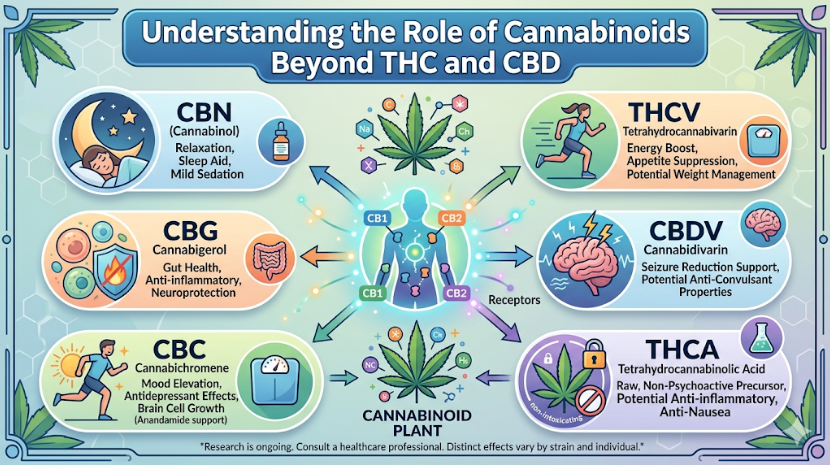
Understanding Minor Cannabinoids
Beyond THC and CBD, cannabis contains several lesser-known cannabinoids that are becoming increasingly discussed in modern cannabis culture.
CBG
CBG is often called a “parent cannabinoid” because other cannabinoids develop from it during the plant’s growth process.
Many consumers describe CBG-focused products as:
- Clear-headed
- Mild
- Functional
- Balanced
Although still less common than THC or CBD products, CBG is becoming more visible in modern cannabis markets.
CBN
CBN has gained attention among consumers looking for more calming nighttime experiences.
It is commonly associated with:
- Relaxation
- Evening use
- Slower-paced sessions
Many people exploring sleep-oriented products are beginning to notice cannabinoid blends that include CBN alongside THC or CBD.
CBC and Others
Cannabis also contains compounds like CBC and additional minor cannabinoids that continue being explored by consumers and producers alike.
While these cannabinoids may appear in smaller amounts, many cannabis users believe they contribute to the overall character and feel of different products.
The growing interest in cannabinoids reflects a larger shift toward more personalized cannabis experiences.
Why THC Percentage Does Not Tell the Full Story
Many consumers still assume higher THC automatically means a stronger or better experience.
In reality, that is not always true.
Two products with similar THC levels may feel completely different because of:
- Cannabinoid combinations
- Terpene profiles
- Product freshness
- Consumption method
This is one reason experienced cannabis users often focus less on pure THC percentages and more on how products actually make them feel.
For example:
- Some THC-heavy products feel uplifting
- Others feel physically calming
- Some create strong mental stimulation
- Others feel smoother and more balanced
The overall composition matters more than many beginners realize.
The Role of Cannabinoids in THC Edibles
Edibles often provide one of the clearest examples of how cannabinoids influence the cannabis experience.
Unlike smoking or vaping, THC Edibles move through the digestive system, which changes how the effects develop and how long they last.
The combination of cannabinoids inside an edible may shape:
- Intensity
- Body sensations
- Relaxation levels
- Duration
- Mood
This is why some edibles feel much heavier or more calming than others even at similar THC doses.
Products like THC Indica gummies are especially popular among consumers looking for slower-paced evening experiences because they are often associated with more relaxing effects.
Consumers are increasingly paying attention not just to THC content but also to the broader cannabinoid profile within edible products.
CBD Still Plays an Important Role
Although the cannabis industry continues expanding beyond THC and CBD discussions, CBD remains an important part of the conversation.
Many consumers appreciate CBD because it often feels:
- Milder
- More balanced
- Less intense
- Easier for beginners
Some users also prefer products that combine THC and CBD together because the balance may create a smoother overall experience.
This balanced approach is one reason the CBD vs. THC discussion continues remaining relevant even as more cannabinoids gain attention.
Rather than competing against each other, many cannabinoids work together to shape how cannabis products feel overall.
Consumption Method Changes the Experience
Cannabinoids can also feel different depending on how cannabis is consumed.
For example:
Smoking Flower
Cannabis flower typically creates:
- Faster onset
- Shorter duration
- More immediate effects
Vapes
Vapes are often chosen for:
- Convenience
- Discretion
- Controlled sessions
- Faster effects
THC Edibles
Edibles are usually associated with:
- Slower onset
- Longer-lasting effects
- Stronger body sensations
The same cannabinoids may feel noticeably different depending on the format being used.
This flexibility allows consumers to choose products that better match their routines and comfort levels.
Why Cannabis Consumers Are Becoming More Selective
Modern cannabis culture has become more experience-focused.
Consumers are paying attention to:
- Product quality
- Freshness
- Terpene profiles
- Cannabinoid balance
- Intended effects
Instead of chasing the highest THC number possible, many users now prioritize:
- Smooth experiences
- Functional daytime products
- Relaxing evening options
- Balanced effects
This shift reflects a more mature understanding of cannabis overall.
People want products that fit specific moods, schedules, and lifestyles rather than simply the strongest option available.
Education Makes the Experience Better
One reason cannabinoid conversations continue growing is because consumers now have access to more information than ever before.
People are asking better questions:
- Why do two products feel different?
- What creates relaxing effects?
- Why do certain edibles feel stronger?
- How do cannabinoids interact together?
Understanding these details helps consumers make more informed choices.
It also reduces confusion for beginners who may otherwise rely only on THC percentages when selecting products.
Conclusion
Cannabinoids are far more complex than simply THC and CBD alone. While those two compounds remain central to cannabis culture, the broader cannabis experience is shaped by multiple cannabinoids working together in different ways.
From THC Edibles and THC Indica gummies to flower, vapes, and balanced cannabinoid blends, modern cannabis consumers now have more ways than ever to personalize their experience.
Platforms like Dank.ca continue helping users explore products designed around quality, variety, and different lifestyle preferences rather than focusing only on THC percentages.
As cannabis culture evolves, understanding cannabinoids beyond THC and CBD allows consumers to make smarter choices and enjoy more balanced, intentional experiences overall.